

Launching an ecommerce website has never been easier.

Ranking one has never been harder.
Over the last decade I've helped ecommerce brands grow from brand-new Shopify stores to established retailers generating millions in online revenue. One lesson keeps repeating itself.
The order matters.
Do the right things in the wrong sequence and organic growth becomes much harder than it needs to be.
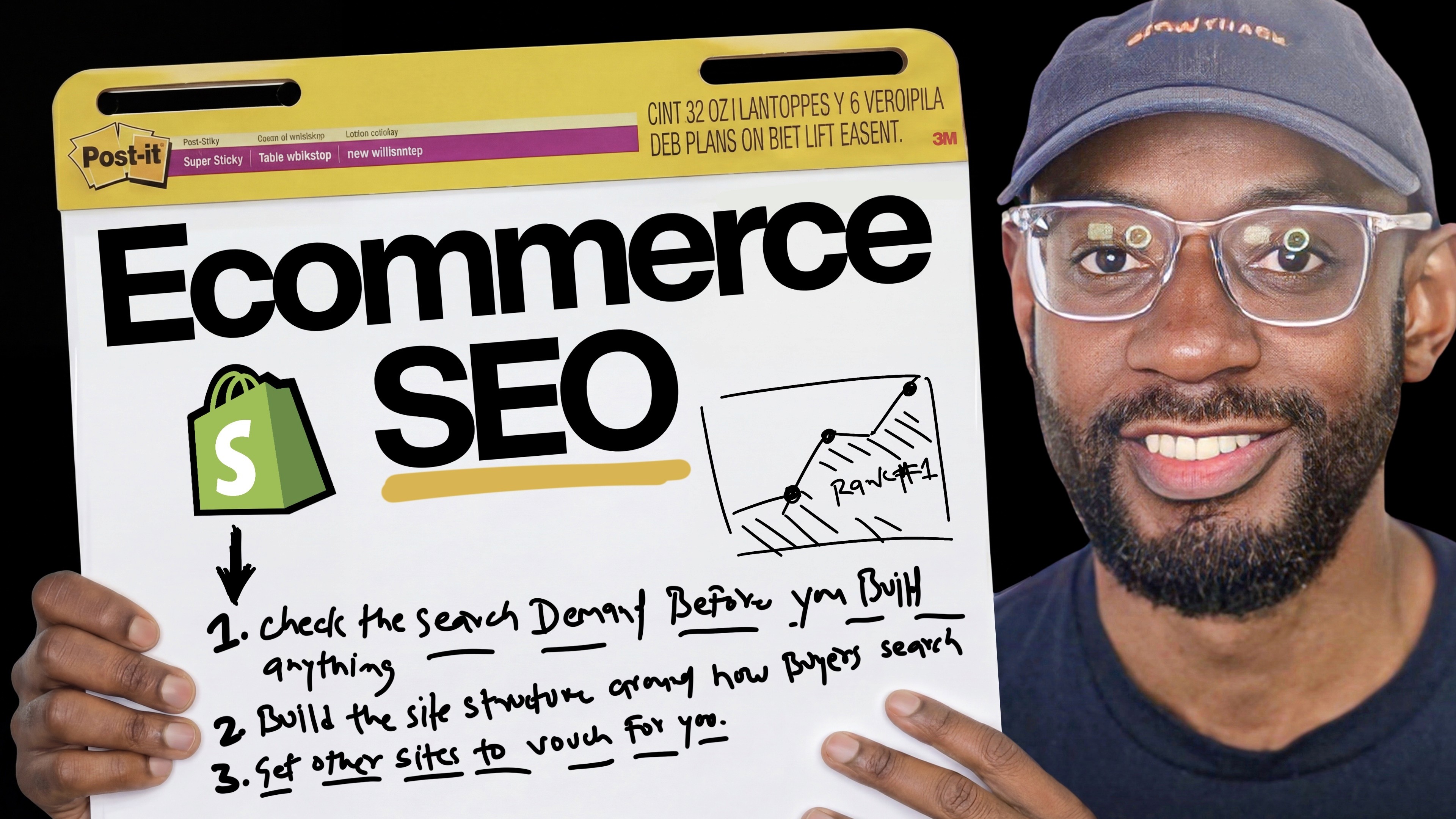
Here's the exact playbook I'd follow if I were launching a brand-new ecommerce business today.
Validate Search Demand Before You Build Anything
The first question isn't "Which platform should I use?"
It's "Are people actually searching for what I want to sell?"
Too many businesses build a complete ecommerce website before checking whether enough demand exists.
If the search volume isn't there, SEO can't magically create customers.
It can only capture existing demand.
I'd start by researching:
Main product categories
Commercial buying keywords
Seasonality
Search trends over time
Google Trends is a fantastic place to start because it quickly shows whether demand is growing, declining or highly seasonal.
I'd also combine this with tools like Semrush or Ahrefs to understand keyword volume and commercial intent.
Separate Buyers From Researchers
Not every search has the same value.
Someone searching for "best running shoes for flat feet" is much closer to buying than someone searching "how to start running".
Understanding that difference shapes your entire content strategy.
Commercial pages target buyers.
Informational content supports the journey.
Both matter, but they shouldn't be treated the same.
Build Your Site Around How Customers Search
One of the biggest mistakes ecommerce businesses make is organising products the way the business thinks about them rather than the way customers search.
Your internal catalogue rarely matches real search behaviour.
Instead, build your navigation around buyer language.
A running shoe store might structure categories like this:
Men's Running Shoes
Women's Running Shoes
Trail Running Shoes
Walking Shoes
Marathon Running Shoes
Every category should exist because customers search for it, not because your inventory system happens to group products that way.
Find Niches Inside Larger Categories
Broad categories are competitive.
Niche categories are often where new brands gain traction.
For example, rather than trying to rank for "running shoes", a new business could build authority around marathon running shoes.
It's specific enough to build topical authority while still attracting meaningful commercial demand.
Over time, that authority can expand into broader categories.
Don't Launch 500 Pages on Day One
This is probably the biggest mistake I see.
New websites launch with hundreds of products and dozens of category pages.
The problem?
A brand-new website has almost no authority.
When you spread that authority across hundreds of pages, none of them receives enough momentum to compete.
Instead, I'd focus on just a handful of priority pages.
Homepage
Two or three core category pages
Your highest-value product pages
Once those pages begin gaining visibility, expand gradually.
Get the SEO Fundamentals Right
Before publishing more pages, make sure every important page includes the basics.
Clear title tag
Matching H1 heading
Compelling meta description
Unique product copy
Helpful FAQs
Strong internal linking
None of these individually create rankings.
Together, they create pages Google can understand and customers want to visit.
Write Product Content That Adds Value
Manufacturer descriptions are rarely enough.
If every retailer publishes identical product copy, Google has little reason to rank one above another.
Add information customers actually need.
Buying advice
Use cases
Delivery information
Returns
Warranty details
Frequently asked questions
The goal is simple.
Create the most useful page available for that product.
Use Internal Links to Build Topical Authority
Internal linking isn't just navigation.
It helps search engines understand how your website is organised.
Your homepage should link to priority categories.
Category pages should link naturally to relevant products.
Use descriptive anchor text rather than generic phrases like "click here".
The stronger your internal architecture, the easier it becomes for authority to flow throughout the site.
Get Other Websites Talking About You
Technical SEO and great content only take you so far.
Eventually, Google needs evidence that other people trust your brand.
That comes through authority.
Focus on earning:
Press coverage
Supplier links
Industry partnerships
Customer reviews
Relevant brand mentions
One high-quality mention from an authoritative publication often delivers more value than dozens of low-quality backlinks.
AI Search Changes the Game Even Further
Modern search is no longer limited to Google's traditional results.
AI platforms increasingly pull information from multiple sources when recommending brands.
That means visibility now depends on far more than your own website.
Reviews.
Forums.
Industry publications.
Comparison websites.
Brand mentions.
The more consistently your brand appears across trusted sources, the more confidence AI systems have in recommending it.
Final Thoughts
If I were launching an ecommerce business today, I wouldn't start by building hundreds of pages.
I'd validate demand.
Build a focused site architecture.
Perfect a handful of revenue-driving pages.
Then I'd steadily build authority around them.
SEO isn't about doing everything at once.
It's about doing the right things in the right order.
Get the sequence right, and every piece of work you do afterwards becomes significantly more effective.



" width="0px"/></svg>)