Organic Revenue
+231% YoY
Content
+1,000 clicks per month
The Client
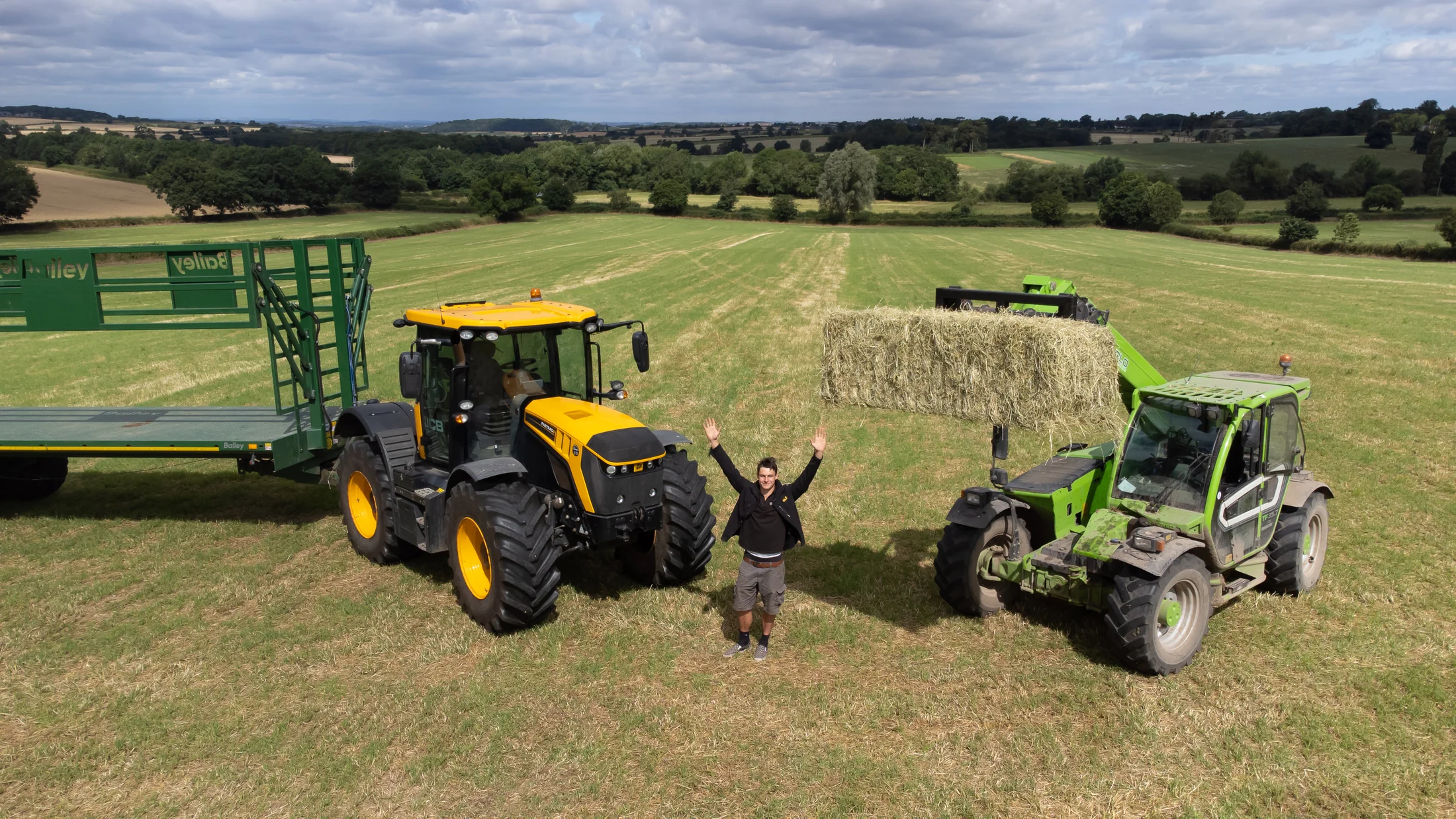
The Happy Hay Co. offers high-quality, eco-friendly feeding hay for small pets and animals, including Timothy hay from their Leicestershire farm, with next-day UK delivery. After moving to a full-service marketing agency two years prior, amid increased online competition and declining organic performance, they aimed to attract new customers with a refreshed SEO approach and to effectively launch new products.
Kevin and his team provided an excellent service at a competitive price. Their reporting on how the SEO was growing is the best that I have worked with to date.
Harry Brooks, The Happy Hay Co. Owner
The Challenges
The challenges within the project stemmed from declining organic performance amid increased online competition, prompting a focus on a fresh SEO approach and new product launches.
Performance issues were evident in the overall revenue, which, according to GA4, appeared to be down 40% compared to the previous year.
A primary structural deficiency was widespread keyword cannibalisation, where pages like `/all-hay/` and the homepage, or the dedicated FAQ pages and product category pages for “Rabbit hay” and “Guinea pig hay,” were duplicating efforts and confusing search engines.
In addition, the main “Timothy Hay” product page was currently underperforming for broader queries, sitting at the bottom of the first search results page with low visibility.

The project also confronted several critical technical and data-related infrastructure obstacles.
Reporting
Reporting accuracy was compromised by e-commerce data being split across two GA4 properties, requiring immediate investigation.
Technical issues
Technical site health issues included a confirmed sitemap error that impeded crawlability and 404 errors for previously valuable SEO pages, such as the crau hay page, which did not properly redirect to suitable alternatives.
Product categories
Category pages lacked a consistent structure, and the brand’s review collection system was insufficient, as it did not fully reflect the brand and required updates to collect both Product and Company reviews.
Inconsistent reputation signals
The issue with review collection was that Happy Hay’s existing reviews did not fully reflect the brand.

I really appreciate the work Growthack has done so far and the support along the way. It has been incredibly helpful in getting the SEO back to a healthy place. They helped The Happy Hay Co. transition to Shopify after technical issues with the old WooCommerce site.
Harry Brooks, The Happy Hay Co. Owner
Our Approach
Our goal was to strategically identify and launch new product categories to grow our market reach. We needed a systematic, data-driven method to assess which potential animal categories were most viable and offered the best return on investment for content development and product stocking.
Structured Category Evaluation
We established a clear set of criteria to evaluate each potential animal category, ensuring every decision was based on a core business rationale.
Segmentation and Identification
We began by compiling a comprehensive list of potential animals and segmenting them by size, starting with ‘Small’ animals (like Chinchillas and Hamsters) and moving to ‘Medium to Large’ animals (like Goats and Ponies).
Viability Check (The “Yes/No” Decision)
The critical question for each animal was: Is hay a main food source for this animal?
“Yes” categories were those where hay is a primary component of their diet, aligning perfectly with our core product offering. Even for categories where hay is a secondary, but still relevant, food source (e.g., Rats, Mice), the potential was approved.
“No” categories were those where hay is not a significant part of their diet (e.g., Goats, Sheep, Llamas), indicating a poor fit for our current product focus and thus, were deprioritised.

For all approved (“Yes”) categories, we immediately moved into an efficient implementation pipeline to ensure a high-quality, fully optimised launch.
This structured approach allowed us to quickly move from brainstorming to a fully prepared launch for all viable categories, ensuring resources were focused only on high-potential opportunities.

Product-First Content Alignment
The foundation of the content strategy is ensuring every piece directly supports a key business objective, specifically by aligning with a particular product or product category, such as ‘Guinea pig hay’.
This step is crucial for transforming content readers into customers. Each item, whether it’s a ‘Buying Guide’ or a ‘How-to’ piece, is conceptualised with a specific product in mind, ensuring that the editorial output aligns with product marketing goals and addresses the target audience’s needs for those specific items.

The strategy employed a variety of ‘Content Type‘ formats, including
- Buying Guide
- Explainer
- Listicle
- How-to
To engage users at different stages of the purchasing journey.
For example, a ‘Buying Guide’ like “How to Choose the Best Hay for Guinea Pigs” directly informs a purchase decision, while an ‘Explainer’ on “Chinchilla Diet” establishes authority and drives brand awareness.

Alongside traditional content formats, we introduced interactive tools as part of the SEO strategy to capture problem-solving searches.
A key deliverable was the Hay Feeding Calculator, an asset designed to provide users with instant, personalised feeding guidance. This allowed us to guide users seamlessly to the relevant products.
3rd-party review collection process
We address the inconsistency by ensuring the collection of both Product and Company reviews.:
- Investigated and updating the review emails setup
- Created a dedicated “Happy Hay Reviews” page to potentially capture branded search traffic

The Results
Previously, HappyHay.co.uk struggled to rank for key commercial queries organically. After working with us for 6 months, we were able to report on the following:
- Desktop visibility: ~11.5% → ~78% (+66.5 percentage points)
- Mobile visibility: ~12.7% → ~73.8% (+61.1 percentage points)
- Trend: Sustained upward growth across both devices, not short-term spikes
- Device parity: Desktop and mobile visibility now closely aligned, indicating strong cross-device performance

Between July 2025 and March 2026, we saw strong, sustained growth in key SEO metrics:
- SEO Recovery: +300 keywords
- Organic Revenue: +231% YoY
- Non-brand Clicks: +233% YoY
- Content: from zero to +1,000 clicks/month

I’m now in a position to self-manage SEO activity and take back control of the business in-house. We’re now on track for a record year of website growth.
Harry Brooks, The Happy Hay Co. Owner
Grow your business with effective technical website strategies
Your results, our expertise.
We’ve received multiple awards and recognitions for our team, clients, and partners.

“It was a well-structured SEO campaign that effectively reversed migration-related traffic losses, refocused the site around user intent, and delivered strong commercial outcomes. The execution was exceptionally thorough and truly outstanding.”

“The campaign demonstrates a strong strategic approach, clearly aligning SEO with business growth beyond standard keyword rankings. Results achieved within 18 months are outstanding, including a direct impact on lead generation and revenue.”

“This went beyond SEO and aligned positioning, messaging, content, and design to drive business growth. Real results with direct SEO-attributed revenue and acquisition. Growthack delivered a comprehensive approach, including a new website.”

Address: Growthack Ltd, 31 Park Row, Nottingham NG1 6FQ
Platforms
About Growthack


Copyright © 2020 – 2026. Registered in England and Wales No. 12868240. VAT Reg GB392684357.
Copyright © 2020 – 2025. Registered in England and Wales No. 12868240. VAT Reg GB392684357.